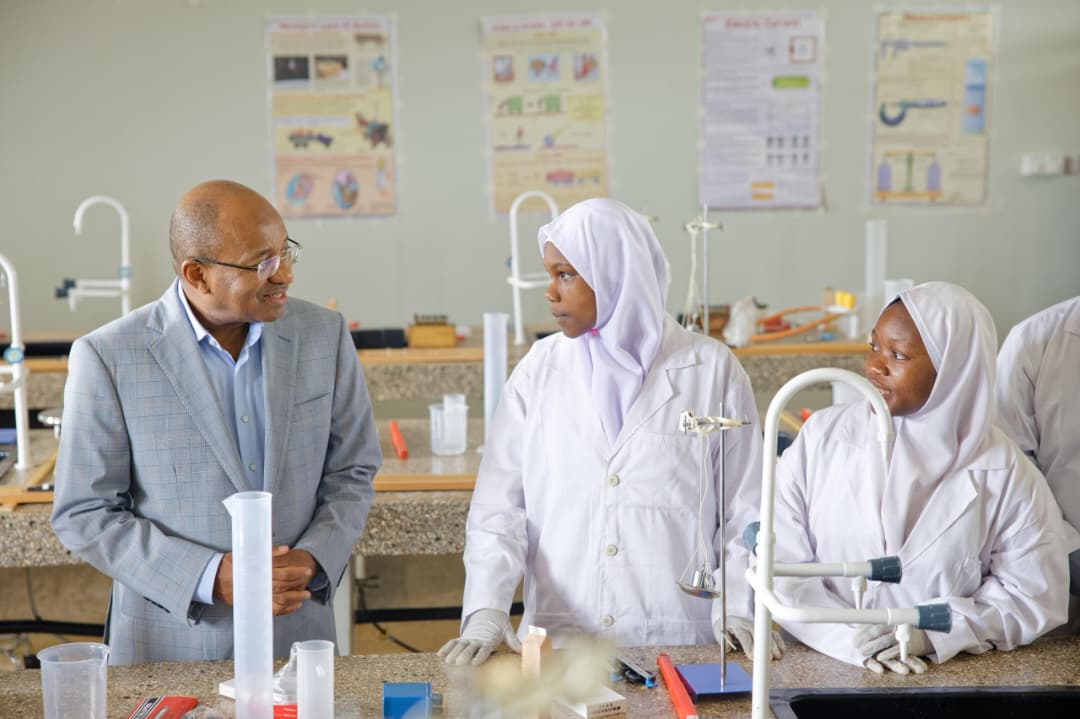
MIUNDOMBINU YA ELIMU ZANZIBAR SASA YALINGANA NA MAHITAJI YA KARNE YA 21

Rais wa Zanzibar na Mwenyekiti wa Baraza la Mapinduzi, Dkt. Hussein Ali Mwinyi, amesema Zanzibar imepiga hatua kubwa katika kuimarisha mazin...

Latest Post

Bridging Divides: President Ramaphosa's Plea for Solidarity in a Fragmented World

Written By CCMdijitali on Thursday, September 21, 2023 | September 21, 2023


Bridging Divides: President Ramaphosa's Plea for Solidarity in a Fragmented World - African Leadership Magazine

King Richards
14 - 18 minutes

President Cyril Ramaphosa’s recent address to the 78th Session of the United Nations General Assembly was a poignant reminder of the challenges facing humanity and the urgent need for global cooperation. In his speech, President Ramaphosa touched upon a wide range of issues, from conflicts and inequality to climate change and the importance of empowering women. This article sums up the key points of his address and highlights the imperative for collective action in the interest of Africa and the world.

President Ramaphosa began by reflecting on the UN’s establishment after World War II and its mission to promote peace, human rights, and a better life for all. However, he noted that the world still grapples with conflicts, inequality, and environmental crises, highlighting the erosion of solidarity and trust among nations.

The President emphasised South Africa’s unwavering commitment to diplomacy, dialogue, and negotiation as tools to prevent and end conflicts. He stressed the importance of human rights, justice, and adherence to international law. South Africa’s own journey from apartheid to democracy underscores the value of engaging all parties in conflict for peaceful resolutions.

President Ramaphosa highlighted South Africa’s participation in the African Peace Initiative, aimed at resolving the Russia-Ukraine conflict. Upholding the UN Charter’s principle of respecting territorial integrity is crucial in this endeavor. The President emphasised the need to avoid actions that exacerbate conflicts and called for investments in conflict prevention and peacebuilding.

Additionally, the President expressed concern over unconstitutional changes of government in some African nations and called for global support for peace efforts across the continent. The African Union’s commitment to partnering with the UN for peace, stability, and development was underscored.

He emphasised respecting the right to self-determination for the people of Western Sahara and called for peace in the Middle East. He expressed concern about the challenges to a two-state solution and stressed adherence to UN Charter principles in resolving conflicts.

Furthermore, President Ramaphosa touched on several critical global issues. South Africa called for the lifting of economic embargoes on Cuba and sanctions against Zimbabwe, emphasizing the suffering endured by ordinary citizens due to these measures. The President also stressed the importance of international cooperation and solidarity to bridge global wealth disparities, highlighting the need to focus on fundamental developmental challenges and secure financial support for achieving the Sustainable Development Goals.

Empowering women and eliminating gender discrimination were central themes in President Ramaphosa’s speech. He emphasised the necessity of providing women with equal access to healthcare, education, and economic opportunities. Additionally, the President expressed deep concern about Africa’s vulnerability to climate change, urging global leaders to accelerate decarbonisation efforts, provide financial support, and operationalize the Loss and Damage Fund to assist countries affected by climate disasters.

The president emphasised a renewed commitment to multilateralism. He called for more inclusive, representative, and democratic international institutions, particularly advocating for reforms within the UN Security Council. This reform should better reflect current global realities and enhance the voice of the African continent and the global south within the international community.

In his address to the UN General Assembly, President Cyril Ramaphosa highlighted the pressing challenges facing the world and the critical role of global cooperation in addressing them. His call for unity, peace, gender equality, and climate action resonates as a powerful reminder that the future of humanity depends on our collective will and commitment to securing a better world for all.

See the full speech below:

Statement by President Cyril Ramaphosa to the 78th Session of the United Nations General Assembly United Nations, New York

President of the 78th Session of the UN General Assembly, Mr Dennis Francis, 
United Nations Secretary-General Mr António Guterres,
Excellencies Heads of State and Government,
Ladies and Gentlemen,

Seventy-eight years ago, in the aftermath of the Second World War, the nations of the world made a solemn commitment to save future generations from the horror and the suffering of war.

Through the United Nations Charter these nations accepted a shared mandate to foster peace and to promote fundamental human rights, social progress and a better standard of life for all. 

And yet, as we gather here, much of humanity is confronted by war and conflict, by want and hunger, by disease and environmental disaster.

Solidarity and trust between states is being eroded. 

Inequality, poverty and unemployment are deepening.

In these conditions and in the wake of a devastating global pandemic, the achievement of the Sustainable Development Goals seem increasingly remote.

At the moment when every human effort should be directed towards the realisation of Agenda 2030, our attention and our energies have once again been diverted by the scourge of war.

But these woes, these divisions, these seemingly intractable troubles, can and must be overcome.

Over millennia, the human race has demonstrated an enormous capacity for resilience, adaptation, innovation, compassion and solidarity.

At this moment, we are all called upon to reaffirm these essential qualities that define our common humanity.

These qualities must be evident in how we work together as a global community and as nations to end war and conflict.

Democratic South Africa has consistently advocated for dialogue, negotiation and diplomacy to prevent and end conflict and achieve lasting peace. 

It has committed itself to the promotion of human rights, human dignity, justice, democracy and adherence to international law. 

From the experience of our own journey from apartheid to democracy, we value the importance of engaging all parties to conflicts to achieve peaceful, just and enduring resolutions. 

It is these principles that inform South Africa’s participation in the African Peace Initiative, which seeks a peaceful resolution of the conflict between Russia and Ukraine. 

In this conflict, as in all conflicts, we have insisted that the UN Charter’s principle of respect for the territorial integrity of every country should be upheld.

Our participation in the African Peace Initiative is informed by a desire to see an end to the suffering of those most directly affected by the conflict and the millions on our continent and across the world who, as a result of the conflict, are now vulnerable to worsening hunger and deprivation.

As the international community, we must do everything within our means to enable meaningful dialogue, just as we should refrain from any actions that fuel the conflict.

As we confront other conflicts in several parts of the world, including on our continent Africa, we need to be investing in prevention and peacebuilding. 

We support the call by the UN Secretary-General in the New Agenda for Peace for Member States to provide more sustainable and predictable financing to peacebuilding efforts. 

As a global community, we should be concerned by recent incidents of unconstitutional changes of government in some parts of Africa.

The global community needs to work alongside the African Union to support peace efforts in the eastern DRC, Libya, Sudan, Somalia, Mali, Central African Republic, South Sudan, northern Mozambique, the Great Lakes Region, the Sahel, Niger and the Horn of Africa.

The African Union Peace and Security Council has declared that it stands ready to deepen its cooperation with the UN Security Council to silence the guns on the African continent and to achieve peace, stability and development.

We are called upon to remain true to the founding principles of the United Nations, by recognising the inalienable right of the people of Western Sahara to self-determination in line with the relevant UN General Assembly resolutions. 

We must work for peace in the Middle East. For as long as the land of the Palestinians remains occupied, for as long as their rights are ignored and their dignity denied, such peace will remain elusive. 

The actions of the Government of Israel have imperiledthe possibility of a viable two state solution. 

The principles of the UN Charter on territorial integrity and on the prohibition on the annexation of land through the use of force must be applied in this situation.

South Africa continues to call for the lifting of the economic embargo against Cuba, which has caused untold damage to the country’s economy and people.

Sanctions against Zimbabwe should also be lifted as they are imposing untold suffering on ordinary Zimbabweans.

As many people around the world are confronted by hunger and want the essential human qualities of cooperation and solidarity must be evident in the actions we take to bridge the divide between wealthy and poor. 

We must summon the necessary will and resolve to regain the momentum towards the achievement of the 2030 Agenda. 

This means that we must address the fundamental development challenges that have long characterised our unequal world. 

To address the developmental challenges that face many people in the world we required targeted investment, technology transfer and capacity building support, especially in key areas such as industrialisation, infrastructure, agriculture, water, energy, education and health. 

This also requires predictable and sustained financial support, including supportive trade policies, from the international community.

We call on our partners from wealthier countries to meet the financial commitments they have made.

It is a great concern that these wealthier countries have failed to meet their undertakings to mobilise 100 billion dollars a year for developing economies to take climate action.

We support the proposals outlined in the Secretary-General’s Sustainable Development Goals Stimulus. 

In particular, we support the call to tackle debt and debt distress, to massively scale up affordable long-term financing to 500 billion dollars a year, and to expand contingency financing to countries in need. 

It is a grave indictment of this international community that we can spend so much on war, but we cannot support action that needs to be taken to meet the most basic needs of billions of people.

The achievement of the Sustainable Development Goals depends fundamentally on the empowerment of women in all spheres of life.

Social and economic progress will not be possible unless we end gender discrimination. We must ensure that there is equal access for women to health care, education and economic opportunities.

We must pay particular attention to the provision of adequate health services to every woman, child and adolescent. By doing so, we will fundamentally improve the health and well-being of all.

The empowerment of women must be central to the actions we now take towards the realisation of Agenda 2030.

The essential human qualities of innovation and adaptation must be evident in the actions we take to prevent the destruction of our planet.

Africa is warming faster than the rest of the world. 

We are told that of the 20 climate hotspots in the world, 17 are in Africa. 

Centuries after the end of the slave trade, decades after the end of the colonial exploitation of Africa’s resources, the people of our continent are once again bearing the cost of the industrialisation and development of the wealthy nations of the world.

This is a price that the people of Africa are no longer prepared to pay.

We urge global leaders to accelerate global decarbonisation while pursuing equality and shared prosperity.

We need to advance all three pillars of the Paris Agreement – mitigation, adaptation and support – with equal ambition and urgency. 

African countries, alongside other developing economy countries, need increased financial support to both implement the 2030 Agenda and achieve their climate change goals in a comprehensive and integrated manner.

We need to operationalise the Loss and Damage Fund for vulnerable countries hit hard by climate disasters, as agreed at COP27.

Africa has embraced this challenge.

Africa is determined to deploy smart, digital and efficient green technologies to expand industrial production, boost agricultural yields, drive growth and create sustained employment for Africa’s people.
 
As the global community, we must ensure the essential qualities that define our humanity are evident in the institutions that manage the conduct of international relations. 

We require institutions that are inclusive, representative, democratic and advance the interests of all nations.

We require a renewed commitment to multilateralism, based on clear rules and supported by effective institutions.

This is the moment to proceed with the reform of the United Nations Security Council, to give meaning to the principle of the sovereign equality of nations and to enable the council to respond more effectively to current geopolitical realities. 

We are pleased that the Common African Position on the reform of the Security Council is increasingly enjoying wide support. 

This process must move to text-based negotiations, creating an opportunity for convergence between Member States. 

We must ensure that the voice of the African continent and the global South is strengthened in the United Nations and broader multilateral system.

All the peoples represented here in this United Nations had their origins in Africa. 

In Africa, they developed the tools and capabilities to spread across the world and achievable remarkable feats of development and progress.

Despite its history, despite the legacy of exploitation and subjugation, despite the ongoing challenge of conflict and instability, Africa is determined to regain its position as a site of human progress.

Through the African Continental Free Trade Area, which is creating a wider seamless trading area of low tariffs and accelerated interconnectivity, African countries are mobilising their collective means and resources to achieve shared prosperity. 

Through the African Continental Free Trade Area, African countries are establishing the foundation for a massive increase in trade, accelerated infrastructure development, regional integration and sustainable industrialisation. 

As the global community, we have the means and we have the desire to confront and overcome the enormous challenges that face humanity today.

As the nations gathered here in this General Assembly, let us demonstrate that we have both the will and the resolve to secure a peaceful, prosperous and sustainable future for our world and for the generations that will follow.

I thank you.

President Tinubu's UNGA Address: Unlocking Africa's Potential Amidst Global Challenges


President Tinubu's UNGA Address: Unlocking Africa's Potential Amidst Global Challenges - African Leadership Magazine

King Richards
14 - 17 minutes

In his inaugural address to the 78th United Nations General Assembly, Nigerian President Bola Ahmed Tinubu delivered a compelling speech that resonated with a global audience. President Tinubu’s words not only called for Africa to transcend the limitations of foreign exploitation but also highlighted the continent’s potential for prosperity, democratic growth, and its role in combating climate change. This article seeks expounds the key points raised in his speech and emphasise the urgency of addressing these issues to unlock Africa’s boundless potential.

President Tinubu began his speech by reflecting on the aftermath of World War II, when nations came together to rebuild war-torn societies. The United Nations was established as a symbol of hope and unity, and this spirit of global solidarity was instrumental in aiding nations’ recovery. President Tinubu drew a parallel between this historical moment and Africa’s current predicament, emphasising that Africa, too, requires the same level of commitment and partnership to overcome its challenges and realise its potential.

One of the central themes of President Tinubu’s address was the importance of seeing African development as a priority for the international community. He stressed that Africa’s economic structures have been skewed, hindering development, industrial expansion, job creation, and equitable wealth distribution. President Tinubu shared his own efforts to foster economic growth and investor confidence in Nigeria by implementing crucial reforms, such as removing fuel subsidies and addressing exchange rate issues. He also extended a welcoming hand to international partners who are willing to engage in mutually beneficial economic collaborations with Africa.

Additionally,President Tinubu emphasised the significance of democratic governance as the best way to ensure the sovereign will and well-being of the people. He denounced military coups and any civilian political arrangement that perpetuates injustice. The wave of democratic movements across Africa, according to him, is a call for solutions to long-standing problems rather than a desire for coups. He also expressed his commitment to negotiating with military leaders in Niger to restore democratic governance, highlighting the need to address political and economic challenges in the nation.

The president addressed the protracted battle against violent extremists in the African region, highlighting the inhumane commerce that thrives amid turmoil. He emphasised the importance of eliminating extremist groups in Africa and called upon the international community to strengthen its commitment to halting the flow of arms and violent individuals into West Africa.

Furthermore, President Tinubu touched upon the issue of securing mineral-rich areas in Africa and preventing exploitation. He cited examples of countries like the Democratic Republic of the Congo suffering from resource exploitation despite a strong UN presence. He also raised concerns about illegal mining and the diversion of funds meant for development into violent enterprises. He called on member nations to collaborate with Africa to deter their firms and nationals from exploiting the continent’s riches.

Addressing climate change

The President highlighted the severe impact of climate change on Africa, including desert encroachment, coastal flooding, and inland flooding. He stressed the need for African nations to fight climate change on their own terms, aligning climate initiatives with economic development efforts. President Tinubu shared examples of initiatives in Nigeria, such as the Green Wall project and forest preservation efforts, which simultaneously address climate change and economic development. He also called upon established economies to invest in Africa’s preferred climate initiatives, demonstrating global solidarity in tackling this critical issue.

Africa’s Bright Future

In his closing remarks, President Tinubu reaffirmed Nigeria’s commitment to the principles of peace, security, human rights, and development. He emphasised Africa’s abundant resources, industrious people, and the need to break free from the constraints of the past. President Tinubu called upon the world to walk with Africa as true friends and partners, recognising that Africa is not a problem to be avoided or pitied but rather the key to the world’s future.

In conclusion, President Tinubu’s address at the United Nations General Assembly serves as a poignant reminder of the importance of supporting Africa in its quest to overcome limitations, realise its potential, and contribute significantly to global development and progress. The world must heed this call to action and work collaboratively to ensure that Africa unleashes its full potentials in the interest of global prosperity.

President Tinubu’s Address At UN General Assembly

STATEMENT DELIVERED BY HIS EXCELLENCY, BOLA AHMED TINUBU, GCFR PRESIDENT, FEDERAL REPUBLIC OF NIGERIA AT THE GENERAL DEBATE OF THE 78TH SESSION OF UNITED NATIONS GENERAL ASSEMBLY, 18TH SEPTEMBER 2023

Mr. President,

Heads of State and Government, Secretary-General,

Distinguished Delegates, Ladies and Gentlemen,

Mr. President,

On behalf of the people of Nigeria, I congratulate you on your well-deserved election as President of this Session of the United Nations General Assembly.

We commend your predecessor, His Excellency, Mr. Csaba Korosi for his able stewardship of the Assembly.

We also commend His Excellency, Antonio Guterres, Secretary General of the United Nations, for his work seeking to forge solutions to humanity’s common challenges.

This is my first address before the General Assembly. Permit me to say a few words on behalf of Nigeria, on behalf of Africa, regarding this year’s theme.

Many proclamations have been made, yet our troubles remain close at hand. Failures in good governance have hindered Africa. But broken promises, unfair treatment and outright exploitation from abroad have also exacted a heavy toll on our ability to progress.

Given this long history, if this year’s theme is to mean anything at all, it must mean something special and particular to Africa.

In the aftermath of the Second World War, nations gathered in an attempt to rebuild their war- torn societies. A new global system was born and this great body, the United Nations, was established as a symbol and protector of the aspirations and finest ideals of humankind.

Nations saw that it was in their own interests to help others exit the rubble and wasteland of war. Reliable and significant assistance allowed countries emaciated by war to grow into strong and productive societies.

The period was a highwater mark for trust in global institutions and the belief that humanity had learned the necessary lessons to move forward in global solidarity and harmony.

Today and for several decades, Africa has been asking for the same level of political commitment and devotion of resource that described the Marshall Plan.

We realize that underlying conditions and causes of the economic challenges facing today’s Africa are significantly different from those of post war Europe.

We are not asking for identical programs and actions. What we seek is an equally firm commitment to partnership. We seek enhanced international cooperation with African nations to achieve the 2030 agenda and Sustainable Development Goals.

There are five important points I want to highlight.

First, if this year’s theme is to have any impact at all, global institutions, other nations and their private sector actors must see African development as a priority, not just for Africa but in their interests as well.

Due to both longstanding internal and external factors, Nigeria’s and Africa’s economic structures have been skewed to impede development, industrial expansion, job creation, and the equitable distribution of wealth.

If Nigeria is to fulfil its duty to its people and the rest of Africa, we must create jobs and the belief in a better future for our people.

We must also lead by example.

To foster economic growth and investor confidence in Nigeria, I removed the costly and corrupt fuel subsidy while also discarding a noxious exchange rate system in my first days in office. Other growth and job oriented reforms are in the wings.

I am mindful of the transient hardship that reform can cause. However, it is necessary to go through this phase in order to establish a foundation for durable growth and investment to build the economy our people deserve.

We welcome partnerships with those who do not mind seeing Nigeria and Africa assume larger roles in the global community.

The question is not whether Nigeria is open for business. The question is how much of the world is truly open to doing business with Nigeria and Africa in an equal, mutually beneficial manner.

Direct investment in critical industries, opening their ports to a wider range and larger quantity of African exports and meaningful debt relief are important aspects of the cooperation we seek.

Second, we must affirm democratic governance as the best guarantor of the sovereign will and well-being of the people. Military coups are wrong, as is any tilted civilian political arrangement that perpetuates injustice.

The wave crossing parts of Africa does not demonstrate favour towards coups. It is a demand for solutions to perennial problems.

Regarding Niger, we are negotiating with the military leaders. As Chairman of ECOWAS, I seek to help re-establish democratic governance in a manner that addresses the political and economic challenges confronting that nation, including the violent extremists who seek to foment instability in our region. I extend a hand of friendship to all who genuinely support this mission.

This brings me to my third crucial point. Our entire region is locked in protracted battle against violent extremists. In the turmoil, a dark channel of inhumane commerce has formed. Along the route, everything is for sale. Men, women and children are seen as chattel.

Yet, thousands risk the Sahara’s hot sand and the Mediterranean’s cold depths in search of a better life. At the same time, mercenaries and extremists with their lethal weapons and vile ideologies invade our region from the north.

This harmful traffic undermines the peace and stability of an entire region. African nations will improve our economies so that our people do not risk their lives to sweep the floors and streets of other nations. We also shall devote ourselves to disbanding extremist groups on our turf.

Yet, to fully corral this threat, the international community must strengthen its commitment to arrest the flow of arms and violent people into West Africa.

The fourth important aspect of global trust and solidarity is to secure the continent’s mineral rich areas from pilfering and conflict. Many such areas have become catacombs of misery and exploitation. The Democratic Republic of the Congo has suffered this for decades, despite the strong UN presence there. The world economy owes the DRC much but gives her very little.

The mayhem visited on resource rich areas does not respect national boundaries. Sudan, Mali, Burkina Faso, CAR, the list grows.

The problems also knocks Nigeria’s door.

Foreign entities abetted by local criminals who aspire to be petty warlords have drafted thousands of people into servitude to illegally mine gold and other resources. Billions of dollars meant to improve the nation now fuel violent enterprises. If left unchecked, they will threaten peace and place national security at grave risk.

Given the extent of this injustice and the high stakes involved, many Africans are asking whether this phenomenon is by accident or by design.

Member nations must reply by working with us to deter their firms and nationals from this 21st century pillage of the continent’s riches.

Fifth, climate change severely impacts Nigeria and Africa. Northern Nigeria is hounded by desert encroachment on once arable land. Our south is pounded by the rising tide of coastal flooding and erosion. In the middle, the rainy season brings floods that kill and displace multitudes.

As I lament deaths at home, I also lament the grave loss of life in Morocco and Libya. The Nigerian people are with you.

African nations will fight climate change but must do so on our own terms. To achieve the needed popular consensus, this campaign must accord with overall economic efforts.

In Nigeria, we shall build political consensus by highlighting remedial actions which also promote economic good. Projects such as a Green Wall to stop desert encroachment, halting the destruction of our forests by mass production and distribution of gas burning stoves, and providing employment in local water management and irrigation projects are examples of efforts that equally advance both economic and climate change objectives.

Continental efforts regarding climate change will register important victories if established economies were more forthcoming with public and private sector investment for Africa’s preferred initiatives.

Again, this would go far in demonstrating that global solidarity is real and working.

CONCLUSION

As I close, let me emphasize that Nigeria’s objectives accord with the guiding principles of this world body: peace, security, human rights and development.

In fundamental ways, nature has been kind to Africa, giving abundant land, resources and creative and industrious people. Yet, man has too often been unkind to his fellow man and this sad tendency has brought sustained hardship to Africa’s doorstep.

To keep faith with the tenets of this world body and the theme of this year’s Assembly, the poverty of nations must end. The pillage of one nation’s resources by the overreach of firms and people of stronger nations must end. The will of the people must be respected. This beauty, generous and forgiving planet must be protected.

As for Africa, we seek to be neither appendage nor patron. We do not wish to replace old shackles with new ones.

Instead, we hope to walk the rich African soil and live under the magnificent African sky free of the wrongs of the past and clear of their associated encumbrances. We desire a prosperous, vibrant democratic living space for our people.

To the rest of the world, I say walk with us as true friends and partners. Africa is not a problem to be avoided nor is it to be pitied. Africa is nothing less than the key to the world’s future.


DKT. NDUMBARO AIAGIZA MIKOA KUJIANDAA VYEMA MASHINDANO YA SAMIA TAIFA CUP

 DKT. NDUMBARO AIAGIZA MIKOA KUJIANDAA VYEMA MASHINDANO YA SAMIA TAIFA CUP

Na Shamimu Nyaki.

Waziri wa Utamaduni, Sanaa na Michezo Mhe. Dkt. Damas Ndumbaro ameiagiza Mikoa yote Tanzania Bara na Zanzibar kujiandaa vyema kwa ajili ya mashindano ya Samia Taifa Cup ambayo yatafanyika mwishoni mwa mwaka huu.

Mhe. Ndumbaro ametoa maagizo hayo Septemba 21, 2023 Zanzibar wakati akikabidhi  vifaa vya michezo kwa wizara ya Habari, Vijana, Utamaduni na Michezo kwa ajili ya maandalizi ya  mashindano hayo ambayo yatahusisha michezo mbalimbali.

"Mwaka huu mashindano yatajumuisha pia Zanzibar na kutakua na Mashindano ya Muziki wa Kizazi Kipya. Lengo la mashindano haya ni kuendelea kuenzi Muungano wetu na  kuhakikisha jamii inajishughulisha na michezo, Sanaa  na Utamaduni kwakua ni Sekta ambazo zinaibua vipaji na kutoa fursa ya ajira" amesema Mhe. Ndumbaro.

Kwa upande wake Waziri wa Habari, Vijana, Utamaduni na Michezo Serikali ya Mapinduzi Zanzibar Mhe.Tabia Maulid Mwita amesema  vifaa hivyo vitagawiwa katika mikoa yote ya Zanzibar na mashindano yataanzia katika ngazi ya Shehia mpaka Mkoa ili kupata wawakilishi wazuri Kitaifa.

Miongoni mwa vifaa alivyokabidhi Mhe. Ndumbaro ni pamoja na mipira ya  michezo ya mpira wa Miguu, Kikapu na Wavu ambayo kila mchezo mipira 18 huku akiwakaribisha wadau kuiunga mkono jambo hilo katika michezo mingine.


HAFLA YA BALOZI GASTON KUKABIDHIWA OFISI YA NAIBU MWANASHERIA MKUU WA SERIKALI


Mwanasheria Mkuu wa Serikali, Mhe. Jaji Dkt. Eliezer Mbuki Feleshi akishuhudia makabidhiano ya ofisi kati ya aliyekuwa Naibu Mwanasheria Mkuu wa Serikali, Dkt. Everisto Longopa (kulia) ambaye kwa sasa ni Jaji wa Mahakama Kuu ya Tanzania, ya vitendea kazi Naibu Mwanasheria Mkuu wa Serikali mpya, Balozi Prof. Kennedy Gaston. Hafla hiyo fupi iliyofanyika katika Makao Makuu ya Ofisi ya Mwanasheria Mkuu wa Serikali Mtumba jijini Dodoma Septemba 20,  2023.Hafla hiyo pia ilihusisha kumuaga Dkt Longopa. 
Balozi Prof. Gaston akikabidhiwa na Jaji Dkt. Longopa nyaraka mbalimbali  za kufanyia kazi.


Jaji Dkt. Longopa (kushoto) akimkabidhi rasmi ofisi Balozi Prof. Gaston.
Balozi Prof. Gaston akisaini kwenye kitabu baada ya kukabidhiwa ofisi.
Jaji Dkt. Longopa akizungumza wakati wa hafla hiyo na kuahidi kuendelea kutoa ushirikiano kwa Balozi Prof. Gaston.
Balozi Prof. Gaston akitoa neno la shukrani baada ya kukabidhiwa ofisi na Jaji Dkt. Longopa na kuomba ushirikiano na watumishi wa ofisi hiyo.
Katibu Sheria Mkuu wa ofisi hiyo, Esther Cheyo akitoa neno la kumkaribisha Balozi Prof. Gaston.
Mwandishi Mkuu wa Sheria wa ofisi hiyo, Onorius Njole akitoa neno la kumkaribisha Balozi Prof. Gaston kwa niaba ya watumishi wa ofisi hiyo na kuahidi kwamba watumishi wako tayari kutoa ushirikiano kwake.
Baadhi ya watumishi wa ofisi hiyo wakiwa nje tayari kumlaki  Balozi Prof. Gaston.
Balozi Prof. Gaston akikabidhiwa shada la maua alipowasili  katika ofisi hiyo.
Mkurugenzi wa Divisheni ya Uratibu na Huduma za Ushauri wa ofisi hiyo, Dkt. Gift Kweka akitoa neno la kumkaribisha Mwanasheria Mkuu wa Serikali (AG), Mhe. Jaji Dkt. Feleshi kuzungumza wakati wa makabidhiano hayo.
Baadhi ya viongozi wa ofisi hiyo.
Mwanasheria Mkuu wa Serikali, Mhe. Jaji Dkt. Eliezer Mbuki Feleshi akizungumza wakati wa makabidhiano hayo na kuwataka watumishi kutoa ushirikiano wa dhati kwa Balozi Prof. Gaston.


 Mwanasheria Mkuu wa Seikali (AG), Mhe. Jaji Dkt. Eliezer Mbuki Feleshi (katikati) akiwa na Balozi Prof. Gaston (kulia) pamoja na Jaji Dkt. Longopa.

IMEANDALIWA NA RICHARD MWAIKENDA

‪0754264203‬


NAIBU WAZIRI MKUU AIELEKEZA REA KUTUMIA MUDA MWINGI VIJIJINI

 
 Naibu Waziri Mkuu na Waziri wa Nishati Dkt. Doto Biteko ameiagiza Menejimenti ya Wakala wa Nishati Vijijini (REA) kutumia muda mwingi zaidi wa kazi vijijini na muda mchache ofisini ili waendelee kusimamia kwa ufanisi utekelezaji wa miradi ya nishati vijijini.

Ameyasema hayo Septemba 19, 2023 wakati alipokutana na kuzungumza na Menejimenti ya REA katika Ofisi Ndogo za Wizara ya Nishati, zilizoko jijini Dar es Salaam.

“Najua mnafanya kazi kubwa ya kuandaa na kuratibu miradi mnayoitekeleza lakini nawashauri nendeni vijijini na tumieni muda mwingi zaidi wa kazi vijijini ambako ndiko miradi yenu inakotekelezwa ili muweze kuisimamia vizuri na kuhakikisha inatekelezwa kwa ufanisi,” amesisitiza.

Aidha, Dkt. Biteko ameipongeza REA kwa kazi nzuri inayofanya katika kuhakikisha wananchi wa vijijini wanapata huduma za nishati bora sawa na walioko mijini. Amewataka kuendelea kuchapa kazi ili azma ya Serikali kuhakikisha kila mwananchi aliyeko kijijini anatumia nishati bora iweze kufikiwa.

Awali, akiwasilisha taarifa za miradi inayotekelezwa, Mkurugenzi Mkuu wa REA, Mhandisi Hassan Saidy amesema mafanikio yaliyopatikana ni pamoja na kuongeza hali ya upatikanaji umeme vijijini kutoka asilimia mbili wakati Wakala unaanzishwa mwaka 2007 hadi asilimia 69 mwaka 2020.

Mhandisi Saidy amesema kuwa mafanikio mengine ni kuwezesha upatikanaji wa huduma ya umeme katika Makao Makuu ya Wilaya 26 ambayo yalikuwa hayajafikiwa pamoja na kuanzisha mpango wa kupeleka umeme katika vijiji vyote 12,318 vya Tanzania Bara.

“Hadi Agosti 31 mwaka huu jumla ya vijiji 10,987 sawa na asilimia 89 ya vijiji vyote vimefikiwa na umeme na vilivyobaki vitakamilika kabla ya Juni 2024,” ameeleza.

Vilevile, ametaja mafanikio mengine kuwa ni kuunga vijiji na vitongoji 4, 234 kwa kipindi cha miaka miwili kupitia miradi mbalimbali, kusaini mikataba ya miradi sita kwa ajili ya kupeleka umeme vijijini ndani ya kipindi cha miezi 12 iliyopita pamoja na kuwezesha ujenzi wa miradi midogo 121 hivyo kuunganisha wateja 178,401 katika maeneo mbalimbali yaliyo mbali na gridi ya Taifa.

@wizara_ya_nishati_tanzania


KUWENI TAYARI KWA MABADILIKO-WAZIRI SILAA


Waziri wa Ardhi Nyumba na Maendeleo ya Makazi Mhe. Jerry Silaa akizungumza na watumishi wa sekta ya ardhi katika mikoa ya Dar es Salaam na Pwani tarehe 21 Septemba 2023 jijini Dar es Salaam.

Na Munir Shemweta, WANMM

Waziri wa Ardhi Nyumba na Maendeleo ya Makazi Mhe. Jerry Silaa amewataka watumishi wa sekta ya ardhi nchini kuwa tayari kwa mabadiliko yenye lengo la kuiboresha sekta ya ardhi.

Silaa amesema hayo leo tarehe 21 Septemba 2023 jijini Dar es Salaam wakati akizungumza na watumishi wa sekta ya ardhi katika mikoa ya Dar es Salaam na Pwani ikiwa ni mara yake ya kwanza kukutana na watumishi hao tangu ateulie kuwa waziri wa wizara hiyo.

‘’Tuna kazi kubwa ya kufanya reforms nyingi katika wizara hii ambazo zinalenga kumhudumia mtanzania. Mifumo ya ICT, TEHAMA Upimaji wetu, nchi inatakiwa kupimwa na kupangwa ili kupunguza migogoro ya ardhi’’ alisema Silaa.

Amewaambia watumishi wa sekta ya ardhi kutambua kuwa, waziri aliyekuja anafanya kazi kubwa ya kumsaidia Mhe. Rais wa Jamhuri ya Muungano wa Tanzania katika sekta ya ardhi na lazima kufanyike mabadiliko makubwa.

Kwa mujibu wa Waziri wa Ardhi, mabadiliko yanayofanyika yanalenga kutengeneza mazingira ya makazi na ardhi inayosimamiwa na wizara yake kuwa katika sura inayoenda kumsaidia mtanzania wa leo na miaka 50 ijayo.

Aidha, Waziri Silaa mewataka watumishi wa sekta hiyo nchini kujitahidi katika suala la utoaji huduma bora kwa wateja hasa katika utoaji kauli wakati wa kuwahudumia wateja.

‘’Mjitahidi majibu mnaojibu wananchi ili wawe watulivu na subira kwani inawezekana suala unalofanya liko nje ya uwezo wako unatakiwa kumuelezea katika lugha ambayo anaweza kuelewa ili akitoka ajue anasubiri kwa muda gani na muepuke njoo kesho njoo kesho’’ alisema.

Amewathibitishia watumishi wa sekta ya ardhi kuwa, wakati wote atakuwa makini kuwalinda lakini wao wafanye kazi ya kuwasaidia wananchi. Pia Silaa amewataka watumishi wa sekta hiyo kuhakikisha wanapotoa huduma kwa wananchi basi kwa lile suala lililofika mwisho lifanyike kwa maandishi ili kuepusha matatizo.

‘’Mjitahidi sana, pamoja na changamoto zenu za kiofisi lakini government move on paperjitahidi sana kuwaandikia watu jambo hili limefika hatua fulani hiyo itatusaidia sana. Bahati mbaya sana kila mgogoro unaanza upya anapokuja kiongozi mkubwa au waziri mpya jambo linaanza upya.


Waziri wa Ardhi Nyumba na Maendeleo ya Makazi Mhe. Jerry Silaa (katikati) akizungumza na watumishi wa sekta ya ardhi wa mikoa ya Dar es Salaam na Pwani tarehe 21 Septemba 2023 jijini Dar es Salaam. Kulia ni Kamishna wa Ardhi Msaidizi mkoa wa Dar es Salaam Shukurani Kyando.

Waziri wa Ardhi Nyumba na Maendeleo ya Makazi Mhe. Jerry Silaa akizungumza na mmoja wa wateja aliyemkuta Ofisi ya Kamishna wa Ardhi Msaidizi mkoa wa Dar es Salaam tarehe 21 Septemba 2023 jijini Dar es Salaam.

Sehemu ya watumishi wa sekta ya ardhi katika mikoa ya Dar es Salaam na Pwani wakimsikiliza Waziri wa Ardhi Nyumba na Maendeleo ya Makazi Mhe. Jerry Silaa alipokutana nao tarehe 21 Septemba 2023 jijini Dar es Salaam. (PICHA ZOTE NA WIZARA YA ARDHI)

Sehemu ya watumishi wa sekta ya ardhi katika mikoa ya Dar es Salaam na Pwani wakimsikiliza Waziri wa Ardhi Nyumba na Maendeleo ya Makazi Mhe. Jerry Silaa alipokutana nao tarehe 21 Septemba 2023 jijini Dar es Salaam. (PICHA ZOTE NA WIZARA YA ARDHI)


WAZEE WA "TANGA ASILI" WAKABIDHI KITABU CHA MAENDELEO YA MKOA WA TANGA


Na Mashaka Mgeta, TANGA


Mkuu wa Mkoa wa Tanga, Mhe Waziri Kindamba, ameahidi kukutana na wazee wa mkoa huo kila baada ya miezi mitatu, ili kujadiliana masuala mbalimbali na kuchangia usuluhishi wa migogoro kwenye jamii.

Mhe. Kindamba ameyasema hayo wakati akizungumza na wajumbe kutoka Taasisi ya Wazee wa Asili wa Wilaya ya Tanga, waliofika ofisini kwake kumkabidhi kitabu cha Mpango wenye lengo la kuchangia maendeleo ya kiuchumi na kijamii kwa wakaazi wa jiji la Tanga.

‘’Ninawaahidi kwamba nitakutana nanyi (wazee) kila baada ya miezi mitatu…mambo yatakayonitatiza nitayawasilisha kwenu kwa ushauri ili kupata suluhu ya kudumu ya matatizo yanayotokea kwenye jamii yetu,’’ amesema.

Mhe. Kindamba amesema kitabu kilichowasilishwa na wazee hao kikiwa na kurasa 22, kimesheheni mawazo mema yaliyo kwenye mpangilio mzuri wa kusomeka, kufikirika na kufanyiwa na kazi, hivyo kitatumika katika kuboresha mkakati wa uwekezaji mkoani Tanga, unaotarajiwa kuzinduliwa Novemba mwaka huu.

Kitabu hicho kinazungumzia na kutoa mapendekezo kwa mambo mbalimbali ya kiuchumi ikiwemo bandari, viwanda na changamoto zilizoathiri ukuaji na maendeleo ya sekta hiyo, ardhi, kilimo, uvuvi na uchumi wa bluu, utalii, elimu, afya na miundombinu.

Pia kitabu hicho kina ushauri kwa serikali katika kuandaa mipango ya maendeleo ya uchumi, mazingira, mataraji ya wazee na orodha ya watu mashuhuri wa Tanga waliochangia maendeleo ya kiuchumi na kijamii.

@waziriwazirik @owm_tz @maendeleoyajamii @millardayo @matukio_tanga @ccm_dijitali @tanga_jiji @ummymwalimu


Support : #BegaKwaBegaNaMamaSamia | JAK | CCM Arusha
Copyright © 2011. CCM Dijitali - All Rights Reserved
Template Created by Creating Website Published by Jasper K
Proudly powered by Blogger
Link